
What Is a First Orthodontist Visit?
A first orthodontist visit is a no-obligation exam where an orthodontist evaluates your teeth, bite, and jaw alignment, then explains your treatment options. Expect photos, digital scans or X-rays, and a conversation about timing and cost. Most visits run 45 to 60 minutes from start to finish.
Nothing gets started without your approval. At Moffett & Walley Orthodontics, the initial exam is a free consult, which means you can gather real answers before making any decision about care for yourself or your child.
Think of it as an information-gathering visit. You leave knowing what’s going on inside your mouth, what your choices are, and roughly what the timeline and investment look like.

Step-by-Step: What Happens at Your First Orthodontist Visit
Your first visit follows six steps: check-in with health history paperwork, digital imaging, a clinical exam, a plain-language review of findings, a discussion of treatment options, and a financial breakdown. The whole visit usually takes 45 to 60 minutes, and you’ll leave with a clear picture of what comes next.
Here’s how it unfolds.
Step 1: Check-in and paperwork
You’ll complete a short health and dental history so the team knows about medications, past treatment, allergies, and any concerns you want addressed. Arriving 10 minutes early makes this part quick.
Step 2: Digital records
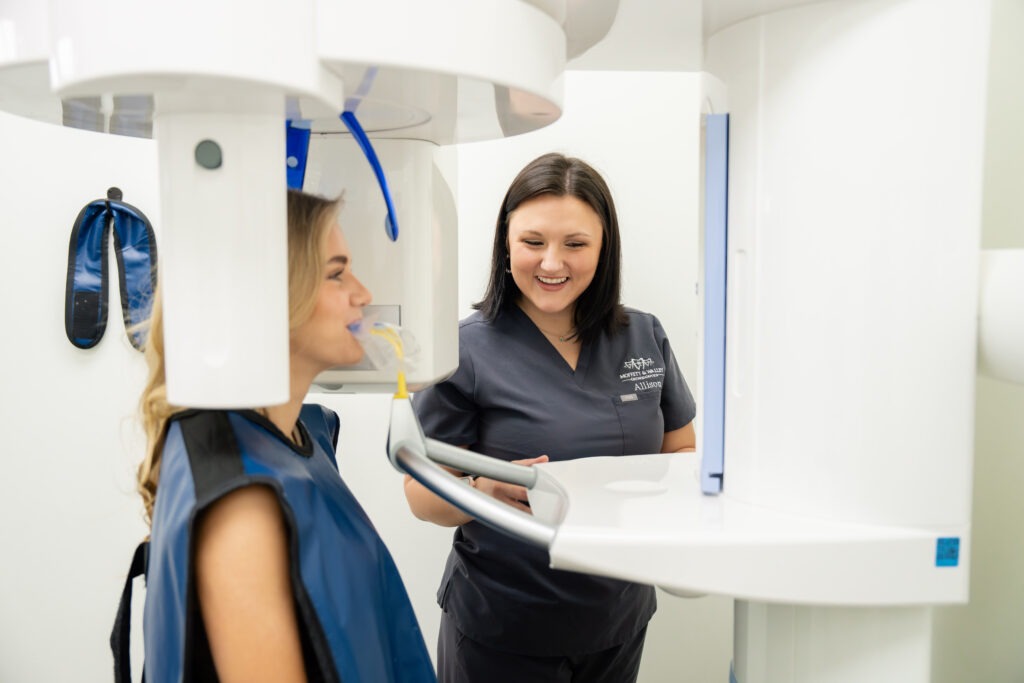
We capture digital X-rays, intraoral and facial photos, and 3D digital scans using our iTero Element scanner. No trays of goop. The scanner takes a detailed 3D view of your teeth, gums, and bite in about 10 to 15 minutes.
Step 3: Clinical exam
Dr. Moffett or Dr. Graham Garvey examines your teeth, how your upper and lower jaws fit together, your jaw joints, and your airway. Children get an extra look at erupting permanent teeth and jaw growth patterns.
Step 4: Findings explained
You’ll hear exactly what’s happening in plain language, crowding, spacing, crossbite, overbite, or whatever the images reveal. Questions are welcome here. Ask all of them.
Step 5: Treatment options
Next comes the part most people came for. You’ll review the appropriate choices for your case, which may include metal braces, clear braces, or Invisalign clear aligners, along with an estimated treatment length for each.
Step 6: Financial review
A treatment coordinator walks through total cost, insurance benefits, and flexible payment plans built around family budgets. You’ll get numbers in writing, not vague estimates.
Why the First Visit Matters
That single hour does a lot of work. It turns guessing into knowing, and it often changes the timing of care in ways that make treatment simpler later on.
– Early diagnosis catches issues sooner. Crowding, crossbites, and spacing concerns are far easier to address when they’re spotted early rather than years down the road.
– You get a customized treatment plan before committing. Estimated timeline, appliance choice, and cost are all on the table before you say yes to anything.
– Digital scans let you preview where you’re headed. Seeing a projected outcome on screen helps you picture your smile goals instead of imagining them.
– A free consult removes the financial risk. Getting answers costs you nothing but time.
– Same-day starts are often possible. If your case is straightforward and you’re ready, treatment can sometimes begin during that same visit.
Early treatment may prevent or intercept more serious issues from developing, and it can make later treatment shorter and less complicated.
Consultation vs. Records Appointment vs. Bonding Day
New patients often mix up these three visits. They serve different purposes and take different amounts of time.
Consultation
– Purpose: Evaluate and discuss options
– Typical Length: 45-60 minutes
– What Happens: Exam, photos, X-rays, diagnosis, treatment options, cost review
Records
– Purpose: Full diagnostic data collection
– Typical Length: 30-45 minutes
– What Happens: Detailed digital scans, X-rays, and photos used to build the customized treatment plan
Bonding / Delivery
– Purpose: Start active treatment
– Typical Length: 60-90 minutes
– What Happens: Braces bonded to teeth, or first set of aligners delivered with wear instructions
Many orthodontic offices, including ours, combine the consult and records into one visit when it makes sense, which saves you a trip.
For parents: if your child isn’t ready for treatment yet, we may recommend periodic growth checks instead. Those visits are short, and they help us time care correctly rather than early.
What the First Visit Costs and What Affects Treatment Pricing
The visit itself is free. Treatment pricing then depends on four things: how complex your case is, how long you’ll be in treatment, which appliance you choose, and your age or growth stage. You’ll see exact numbers in writing, along with monthly options, before agreeing to anything.
The exam, images, and treatment discussion at Moffett & Walley Orthodontics are provided as a free consult, so gathering information costs you nothing. Actual treatment pricing varies from one case to the next, which is why we quote your specific plan rather than a generic figure.
Several things move the final number:
– Case complexity. Mild crowding and significant bite correction are very different amounts of work.
– Treatment length. Most full cases run somewhere in the 12 to 24 month range, and longer treatment generally means a higher total.
– Appliance type. Metal braces are typically the most cost-effective option. Clear braces and Invisalign clear aligners usually cost more.
– Age and growth stage. Some younger patients need a short early phase followed by a second phase later.
Ways to make it work financially:
– Orthodontic insurance benefits, which are often a separate lifetime maximum from regular dental coverage
– FSA and HSA dollars
– Monthly payment plans tailored to family budgets
Ask for a written estimate before you leave. Any orthodontic office worth your trust will hand you one without hesitation.
Who Should Schedule a First Orthodontic Visit
The American Association of Orthodontists recommends an evaluation for every child by age seven, since orthodontic issues usually become apparent around then, when permanent teeth start coming in. Children are only part of the picture, though.
Schedule an exam if you recognize any of these:
– Children around age 7. Even if no treatment is needed yet, an early look lets us monitor jaw growth and time care correctly. For many families, that early visit is how children get a head start on a beautiful smile.
– Teens with crowding, gaps, overbite, underbite, or crossbite. The teen years remain the most common window for full treatment.
– Adults wanting discreet options. Clear braces and Invisalign clear aligners have made treatment realistic for working professionals, and plenty of adults find that it’s never too late for a confident smile.
– Anyone who had braces before. Teeth shift after retainer loss or inconsistent wear. Relapse is common and usually correctable with limited treatment.
– People with jaw clicking, chewing difficulty, or bite discomfort. These symptoms deserve a professional evaluation rather than a wait-and-see approach.
Not sure which category you fall into? That’s exactly what the free consult is for.
Frequently Asked Questions
How long does the first orthodontic visit take?
Plan on 45 to 60 minutes. That covers paperwork, digital records, the clinical exam, and a full discussion of your options and costs. Arriving 10 minutes early to complete forms keeps things on schedule, and you’re welcome to bring a list of questions.
Does the first appointment hurt?
No. The initial exam involves looking, photographing, and scanning, with nothing invasive at any point. Our digital scanner replaces the old impression trays entirely, so there’s no gagging and no mess. Most patients of all ages describe the visit as easy and surprisingly quick.
Will I get braces on the same day?
Sometimes, yes. If your case is straightforward, your records are complete, and you’re ready to move forward, we can often bond braces or start aligner planning during the same visit. More complex cases usually need a separate visit so Dr. Moffett or Dr. Garvey can finalize the customized treatment plan first.
What should I bring to my first orthodontist appointment?
Bring your dental insurance card, a photo ID, a list of current medications, and any recent X-rays from your general dentist if you have them. Parents should bring their child’s insurance details and be prepared to discuss the family’s dental history. Bring your questions too.
Do I need a dentist referral to see an orthodontist?
No referral is required. You can schedule directly with an orthodontic office at any time. Many patients come to us through a dentist’s recommendation, but plenty of families simply call on their own after noticing crowding or a bite that doesn’t look right.
Is the first consultation really free?
Yes. The exam, digital records, diagnosis, and treatment discussion at Moffett & Walley Orthodontics are provided at no cost, with no obligation to start treatment. You’ll leave with real information and written pricing whether you move forward or not.
Every smile is unique, and yours deserves an orthodontic office that treats it that way. Dr. Jared Moffett, D.M.D., M.S., is a board-certified diplomate of the American Board of Orthodontics, with 11 years of training behind him: four years of college, four years of dental school, and three years of orthodontic residency. Only a small share of dental school graduates go on to complete that additional residency and practice orthodontics.
Dr. Moffett and Dr. Garvey see patients of all ages at our Clinton and Madison offices, continuing the legacy Dr. Kenneth Walley built decades ago.
When you’re ready, schedule your free consultation and start your smile transformation.
love. give. smile.